
Annual Notices and Safety Devices: A January Checklist for Small NYC Buildings
October 8, 2026Last reviewed October 16, 2026
Each January, NYC buildings with three or more apartments must send residents window guard, lead paint and other safety notices. What to send by January 16, what to collect by February 15, and the detector rules that come with it.

Every January, NYC building owners have to send residents a set of safety notices and keep records of the responses. Most of these apply to buildings with three or more apartments, which includes most small condos and co-ops. The rules were written with rentals in mind, so how they apply to owner-occupied units isn't always obvious.
This guide covers what goes out, when, and the safety devices that come with it.
The January notice window
Deliver between January 1 and January 16. Collect responses by February 15.
| Notice | Which buildings | What it asks |
|---|---|---|
| Window guard annual inquiry | Buildings with 3+ apartments | Does a child 10 or under live in the unit? (Residents can also request guards for any reason.) |
| Lead-based paint annual inquiry (Local Law 1) | Built before 1960, or 1960–1978 if you know there's lead paint | Does a child under 6 live in or regularly spend time in the unit? |
| Stove knob cover notice (Local Law 117) | Units with gas stoves | Tells residents they can request stove knob covers or safety knobs |
The window guard and lead paint notices can be sent separately or on one approved combined form. Keep proof that you delivered them, and keep the responses.
Window guards
If a child 10 or under lives in an apartment, the owner must install approved window guards on every window except those leading to a fire escape (and, in some cases, a window in an apartment with a fire escape). Residents can also request guards for any reason. Missing window guards where required is a Class C HPD violation with a 21-day correction period.
What to do if no one responds: follow up, and if you still don't hear back, you may need to inspect the unit.
Lead-based paint (Local Law 1)
In pre-1960 buildings (or 1960–1978 with known lead paint), when a child under 6 lives in a unit, the owner has ongoing obligations: annual visual inspections for lead hazards, safe work practices during repairs, and fixing peeling paint. Turnover rules apply when units change hands.
This is one of the more complex areas of NYC housing law. If you have young children in the building, talk to a lead-safe contractor or attorney about your specific situation.
Stove knob covers (Local Law 44)
Owners must provide stove knob covers for gas stoves where a child under 6 lives, and since 2023 must send an annual notice telling residents they can request covers or permanent safety knobs in writing. Covers must be available within 30 days of the notice. Keep records of the notice, responses and devices provided. HPD treats missing documentation as a Class B violation.
Fire safety: the FEP guide and annual bulletin
Residential buildings with three or more apartments have FDNY fire safety obligations:
- Distribute the Fire and Emergency Preparedness (FEP) Guide to residents at least once every three years. This can go out with the January notices or during Fire Prevention Week in October.
- Distribute the annual FEP bulletin.
- Post the required fire safety notices (e.g. on the inside of apartment doors and in common areas).
- Keep distribution records for five years.
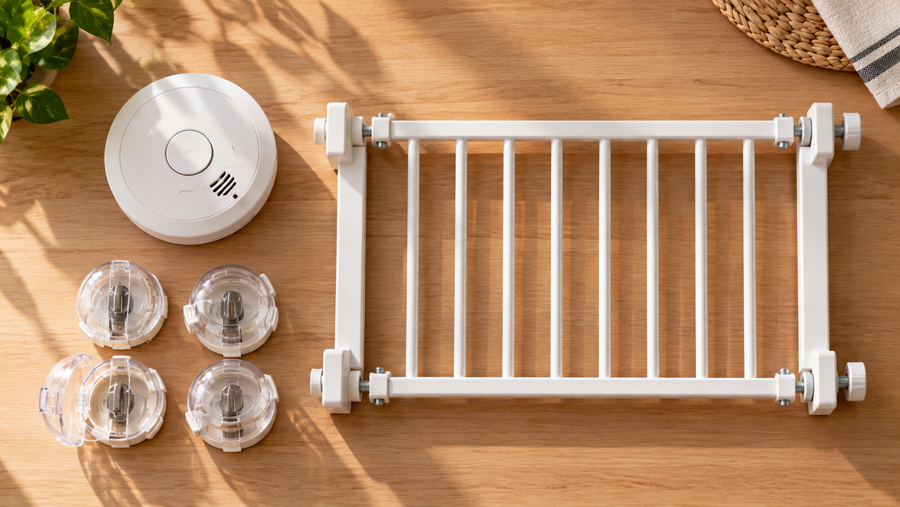
Safety devices
Smoke and carbon monoxide detectors
NYC requires working smoke and CO detectors in residential units. In rental buildings the owner installs them, and tenants maintain them and can be charged for them. In co-ops and condos, the proprietary lease or bylaws usually make unit owners responsible inside their apartments, while the building handles common areas.
Natural gas detectors (Local Law 157): postponed
When it takes effect, detectors must meet the NFPA 715 standard and be installed near gas appliances. Our advice: don't rush to buy devices now. Put it on your 2027 planning list and watch for DOB's announcement.
Record keeping
For every notice, keep proof of delivery, the responses, your follow-ups, and any devices installed. HPD and DOHMH can ask for these during an inspection. A simple folder per year works. So does OurStoop's document vault.
Frequently asked questions
Every unit in our co-op is owner-occupied. Do we still send notices?
In many cases, yes. The window guard requirement applies to multiple dwellings, including co-ops and condos. How the lead and stove knob rules apply to owner-occupied units varies. [verify and answer definitively]
Can we email the notices?
[verify whether electronic delivery is acceptable for each notice]
A resident didn't return the form. Now what?
Follow up in writing and keep a record. For window guards and lead paint, the city expects owners to follow up with non-responders, which may mean visiting the unit.
Is the gas detector law in effect yet?
Not as of this writing. Enforcement was postponed to no earlier than January 1, 2027.
Sources
- DOHMH — Lead Poisoning & Window Guards Annual Notice FAQ (PDF)
- HPD — Property Owner Bulletin, December 2025
- HPD — Keeping Homes Fire Safe (PDF)
- HPD Lead-Based Paint (LL1)
- HPD — Stove Knob Covers (LL44)
- FDNY Fire & Emergency Preparedness rules
- DOB Local Law 157 natural gas detector
Cover photo by Tim Hüfner on Unsplash